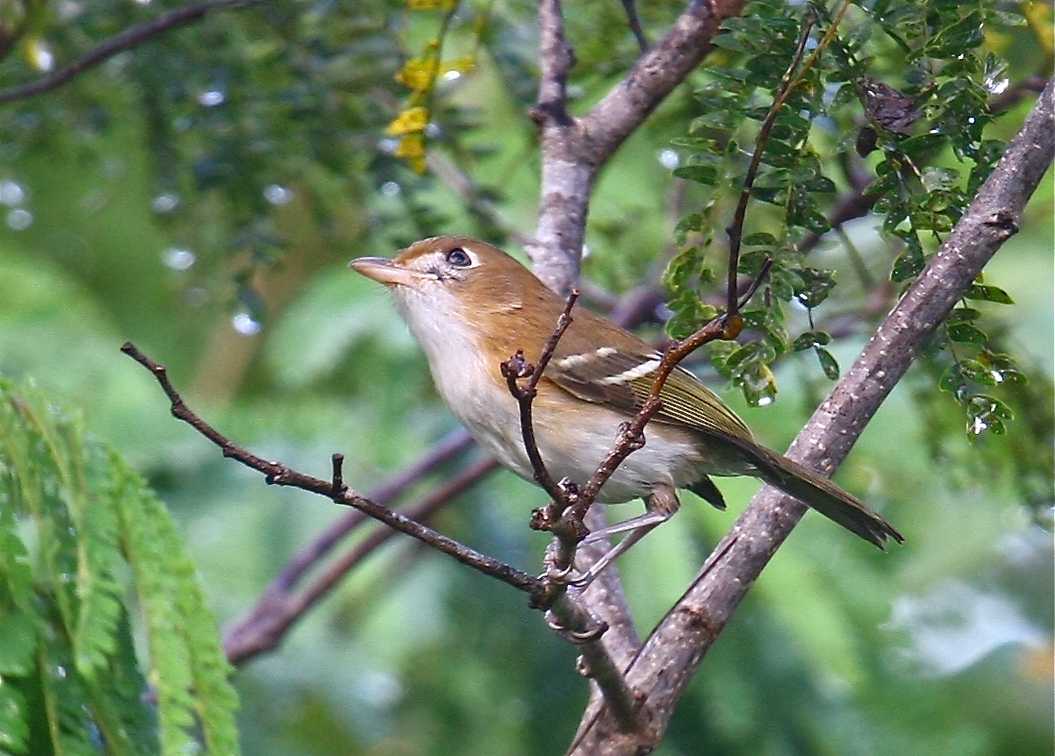
Tuesday, January 14, 2014

Backpacking Mexico and Belize: A slightly different tropical adventure, Pt 4: Birding Belize: Mountain Pine Ridge Reserve

Thousand-foot Falls


It's January here in Wisconsin and I'm dreaming of birding in tropical America. Since I can't get there right now, I'll relate a story of birding there instead.

But quickly, here's the link to all my photos from this trip on Flickr:
http://www.flickr.com/photos/swallowtailphoto/sets/72157632353350386/


Dec 2012:
I'm in the midst of a trip to Mexico's Yucatan Peninsula and we're about to cross the border into Belize.

Crossing the border into Belize is no easy task.  It costs money. A lot of it.
One thing to understand, when crossing a border in tropical America, there is always a fee of some kind. Sometimes there is more than one fee. Sometimes corrupt officials will try to get you to pay more than the fee so they can bolster their pockets.  In any case, you should find out what the fee is before you get there.   The other catch to crossing into Belize from Mexico is that the border is in no-mans land. On the Mexican side, Chetumal is the closest town.  On the Belizean side, Corozal is the closest town.  That's a distance of several miles between cities, an area in which no buses run.   The main means of transportation across the border is by Taxi.  These are people who easily recognize Americans and attempt to charge them ten times what the actual fee is.   We managed to cross inexpensively by jumping aboard a Collectivo (a van that runs on a flat fee split between all the occupants. the more people, the cheaper it is).  Once in Corozal, we caught a bus to the old Belizean capital, Belize City.

One thing you should know about the Belizean bus system.  It's almost worse than Panama.


These buses are retired American school buses. As such, they are noisy, diesel-spewing and uncomfortable to ride in.  Oh yea, one more thing, there's no such thing as full bus!
One bus we were on was packed beyond standing room only, and we stopped and picked up 5 more people....


Belize City is a typical Central American city. It was the Capital city of Belize until 1961 when hurricane Hattie wiped out 75% of the buildings. It's not too bad by most standards, but not a place you want to spend a lot of time if you like having a wallet with money in it.  The couple hours we spent in Belize City were at the bus station, napping.  We caught the first bus we could that headed westward along the second of only two main highways in Belize.

The bus rides of course were interesting. Traveling from Chetumal to Belize City, we birded our way along, out the bus window.  Water birds were plentiful. Ibis, Herons, Jabiru and Wood Storks, Tropical Kingbirds on the wires, a few hawks here and there. There was always a lot to see.  Tired as we were from traveling, falling asleep often meant missing a good bird (our only Jabiru of the entire trip was out the bus window).


Our trip out of Belize City, westward was mostly uneventful. The lowland scrub and wet savannah habitat held a few birds, but nothing special. We kept a sharp lookout, but failed to see the desired Savannah Hawk.

Our route took us through the new Belizean capital city of Belmopan.
50 miles inland and 250ft above sea-level, Belmopan is much safer from hurricane damage than coastal Belize City, and, at around 20,000 inhabitants, is roughly 1/3 the size of the former Capital.
From there, we caught a bus to the small mountain town of San Ignacio.

San Ignacio is a pretty little village set in a mountain valley with a river flowing between it and its sister city of Santa Elena.  Upon arriving in town, we hired a taxi driver to take us to the rental agency we had rented a car from.   When hiring taxis, one thing that is extremely important is to agree on a price beforehand.  It took a while, but we eventually argued him down from his ridiculous price of $25.
He then proceeded to take us on a ride all over town, bouncing between San Ignacio and Santa Elena, attempting to put on the max amount of miles.  Naturally, the rental place we wanted to go was the very last place we stopped.  He then tried to charge us an exorbitant fee, that we politely declined and paid him what we had originally agreed upon (of course we had to listen to him complain for a while).

After obtaining our rental car, we headed out of town, up into Mountain Pine Ridge Reserve to find a campsite for the night. It took a while to get up to where we were going and it was well after sunset by the time we arrived at Douglas Da Silva.  We drove around a little, scouting, looking for a good place to pitch our tents and finally found one.
The next morning, we awoke to the fresh, cool mountain air and the smell of pine trees.

Our campsite


We explored a little


Perched on a Granite extension of the Maya Mountains, Mountain Pine Ridge Reserve has an interesting history.  It covers just over 100,000 acres and has been somewhat protected for tourism interests.  It's all that's left of an old reserve that covered over a million acres of pine forest.  The predominant tree within the reserve is Honduras Pine interspersed with significant stands of broadleaf forest.   The stories heard from some of the first explorers of the region tell tales of vast spectacular pine forests with tall trees, stretching for miles. This, however, is not the sight that greets visitors today.  In 1949, a wildfire ravaged much of the reserve and destroyed almost all of the trees, almost wiping out the stands of timber.  The forests are slowly regenerating, but are being impeded by infestations of Southern Pine Beetle. Today, the forests are only a shadow of what they once were.  Most of the trees are small and short and more than 85% show signs of the beetle.


Being at tropical latitudes with a subtropical climate, MPR gets an appreciable amount of rain. This often turns the roads to mud, which requires a 4WD vehicle.


Once we packed up our tents, we headed for Caracol along the long, winding road.


Caracol is an ancient Mayan city at the western edge of MPR that was discovered in 1937.
The city was one of the most important regional political centers during the Classic Period.
Now being continuously excavated, it serves as a regional tourist destination.  If you arrive early, before everyone else, you can bird the ruins in relative peace.  The birding is better in the morning anyway. ;)

The road out to Caracol is long and winding, but runs through a beautiful valley, crossing back and forth over a small stream:
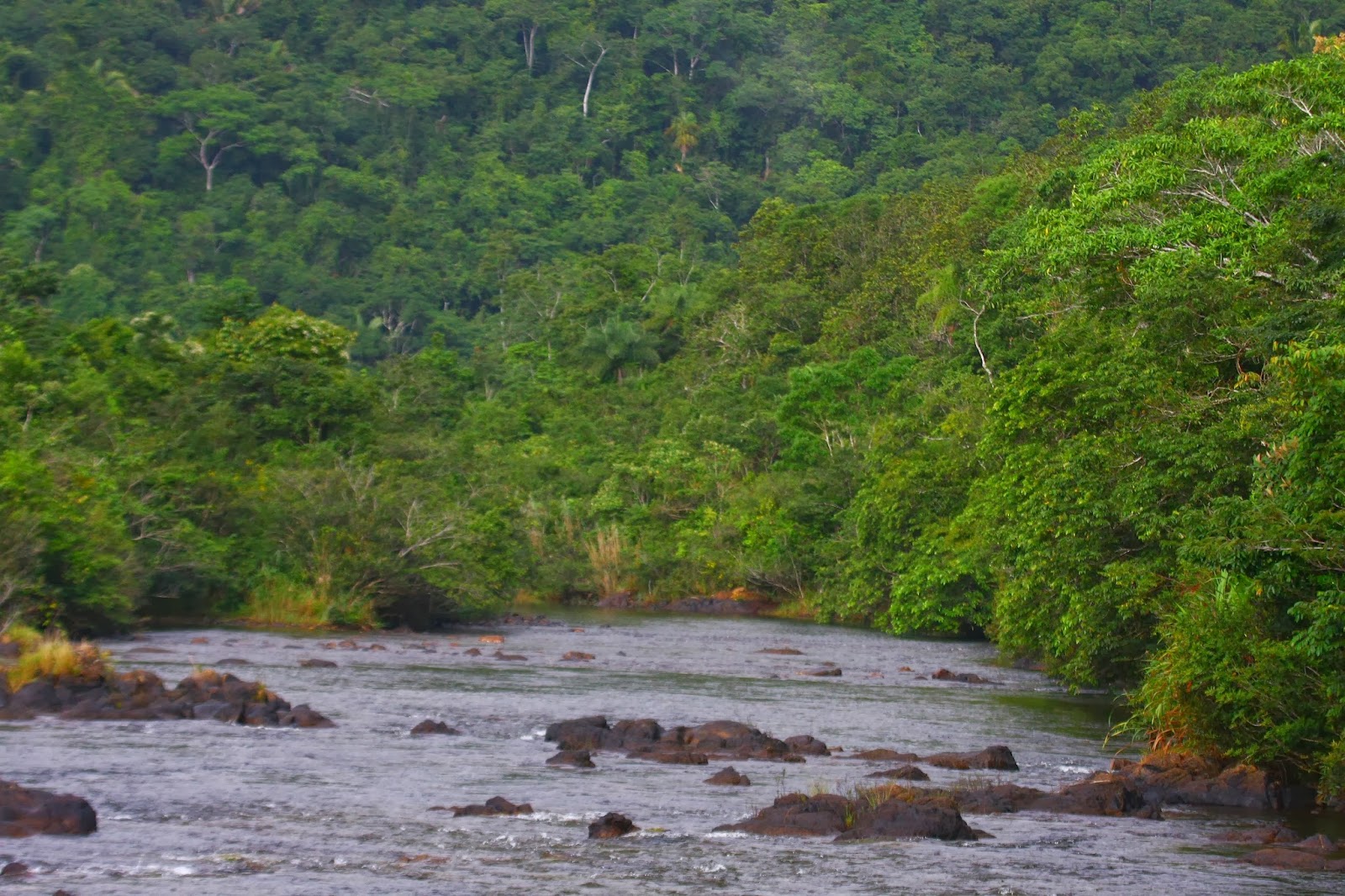


The ruins themselves are some of the best we came across during our trip and were our favorite stop.


But let's get to some of the gorgeous birds we saw!  On the way in, we were fortunate enough to come across a few spectacular Scarlet Macaws and a pair of King Vultures!


Birding at the ancient cities is often quite good and often, the best place to be is at the top of the highest pyramid, above the canopy.  We saw more than one Orange-breasted Falcon in this way.
The best thing about the pyramids that were open to climbing is that you can bird at every level of the surrounding forest.  Low canopy found this White-whiskered Puffbird:


Boat-billed Flycatchers were slightly lower:


While Yellow-winged Tanagers were high in the canopy:


After spending most of the day birding Caracol (bird activity started dropping off around noon), we headed out to bird other parts of the reserve.  A stop at the Thousand-foot Falls (photo at the top of this post) added Orange-breasted Falcon to our Belize list.  The views from the overlook were quite spectacular.

That night, we found a random trailhead to pull off on and camped for the night.

The next morning, we explored a slightly different, shorter, scrubbier habitat.  This gave way to Rufous-capped Warbler:


And Rusty Sparrow, possibly my favorite sparrow after Rufous-collared:


A stop at Blancaneaux Lodge for a quick meal (and a rather expensive one) and we explored a few areas for Stygian Owl, without luck.   Returning to the area the next morning got us gorgeous views of the local specialty, Azure-crowned Hummingbird:


Acorn Woodpeckers were fairly common throughout the area:


On our way out, back to San Ignacio, we stopped at a small ravine with a stream running through it. Here, we picked up a couple Woodcreepers, some Euphonias, and this beautiful Royal Flycatcher:


Upon our return to San Ignacio, we returned the rental car, booked a room in a small, inexpensive hotel in town for the night. The small cafe next door provided excellent food for dinner, as well as breakfast the next morning.  Doing a little bit of exploring, we found, to our delight, a small, french-style bakery a few blocks away where we bought fresh bread and pastries for the next few days of traveling.


Belize was good to us. It had gorgeous mountain streams and rivers, spectacular views and waterfalls, lots of awesome birds, and the best part? almost everyone speaks at least some english.  Many locals also speak Spanish, and a good number speak a local Creole dialect that is a combination of words from English, French, Spanish and a couple of native languages. It really is rather interesting to hear spoken.

If you choose to visit Belize, you should keep in mind that it is expensive!
In Belize, there are no chains. That is, there is no Wal-mart, no McDonald's, nothing like what you'd expect in the US.  Belize produces nothing and imports everything, so all goods and food are twice as expensive as they would be otherwise and all stores are run by Orientals. The Belizean Dollar is at two to the American Dollar, so for Americans, everything is half price. This makes the cost of most things come out to about what you would pay if you were in the US.  That goes for hotel rooms too.

So if you go, make sure it's within your budget. Oh, and rent a car. It's much better than trying to get around via the uncomfortable, packed bus system.


Til next time!


Wednesday, April 17, 2013

WIYBC field trip on Saturday


Some friends and I recently created the Wisconsin Young Birders Club; a statewide club built by and for YBs.  We are official as of Jan 1st, 2013 and are working to get a website up and provide some field trip opportunities and other fun stuff for WI YBs.

All YBs under 26 years of age are welcome to attend any of our field trips or meetings and any adults who bring a YB with them are also welcome to attend.

Until we get our website up and running, you are welcome to check out our Facebook Page here:
https://www.facebook.com/WIYoungBirders?ref=hl 


Our April field trip will be held this Sat, Apr 20th and will be to Portage County in central WI.

Details:
Who: WIYBC

What: Field trip.
Leader: WIYBC Member Rob Pendergast

Where: Portage County.  Meet at the Prairie Chicken information stand along County W near the intersection with N 120th St, south of Plover.  Google Map:  http://goo.gl/maps/4E0ws

When: 5:30am, Apr 20th, 2013.  The trip will last til early to mid afternoon.
(If you cannot make the early meeting time, let us know and we will work out where you can meet us later.)

Why: to spend the day birding Portage County looking for Greater Prairie-chicken, shorebirds, early passerine migrants and more.


What to bring:
Binoculars
a scope if you own one
a means of transportation (though Carpooling is possible)
Food (sack lunch or whatever you want to eat or snack on)
Camera (if you have one and would like to bring it)
Field guide (we will have some on hand as well)
A positive and enthusiastic viewpoint. ;)


Field trip page is here:
https://www.facebook.com/events/228445140630280/


See you there!


Tuesday, March 19, 2013

Backpacking Mexico and Belize: a slightly different tropical adventure. Pt 3

Vigia Chico Road


We awoke to the raucous screeching of Olive-throated Parakeets overhead.
A Tropical Pewee called from somewhere nearby, Social Flycatchers squealed in the distance, Yucatan Jays called back and forth to each other and Orange Orioles whistled away. An Altimira Oriole soon joined them.  We leaped out of our tents, grabbed the bare necessities for the day and took off through the early morning light.

We barely made it fifteen feet before the Tropical Pewee stopped us in our tracks. Our attention was then distracted by a White-collared Seedeater which led to the discovery of a Yucatan Jay.  As we picked our way back to the road, we quickly discovered more birds, foraging at the woodland edge. We eventually found five species of Orioles; including good looks at the endemic Orange Oriole.
Tropical Gnatcatchers and Spot-breasted Wrens were common as well as the ubiquitous Black Catbird.


Black-throated Green Warbler
There were also a number of North American wood-warblers. Magnolia was the most common, quickly followed by Black-throated Green Warbler.  It was slightly odd, seeing our familiar northern warblers in a tropical climate.

As we walked along the road, a Keel-billed Toucan flew overhead, followed by a couple more.
Canivet's Emeralds whizzed by now and then and Ferruginous Pygmy-owls called almost at every half-mile.

Rose-throated Tanager
Rose-throated Tanager was one endemic that we had hoped to find. It didn't take long.
While picking through Red-throated Ant-Tanagers, a male Rose-throated Tanager popped up. We later saw a female as well.  Red-crowned Ant-Tanager was another good bird that we picked up along the stretch of road, along with more Mangrove Vireos:

Mangrove Vireo

Vigia Chico road was also our first encounter with a hummingbird that I had seen only once previously in southern Texas; Buff-bellied Hummingbird:

Buff-bellied Hummingbird

It was also where I got to see a lifer that I should've seen in Arizona. I thought it interesting how I picked up Rose-throated Becard in Mexico first:

Rose-throated Becard
We walked the few miles down to the lake where we stopped for lunch:


The birding had quieted down by then, but there were plenty of Dragonflies around, like this Brown Setwing:

Brown Setwing

After birding all day, returning back to camp (yes, all our stuff was still there) and crashing for the night, we awoke the next morning and spent some time birding around camp.  That was when we found the highlight of our two days there.  We were walking along a small, narrow trail, when we heard a noise off to one side of the trail and low, rather similar to a frog or insect. While looking for it, we happened upon a bird we though we were going to miss: Yucatan Poorwill!


Yucatan Poorwill


While birding Vigia Chico Road, I also got to see two species of Butterflies that I've been wanting to see for a very long time.  The first being the awesome Zebra Longwing, for sure one of the prettier butterflies of the tropics: 

Zebra Longwing


The other was the spectacularly beautiful Malachite Butterfly!!


Malachite Butterfly


My next post will cover our time in Belize and Tikal.
Til then, Happy Birding!

Saturday, January 5, 2013

Mexico and Belize: a slightly different tropical adventure. Pt II

Yellow-faced Grassquit

Our couple of days on Cozumel were more than successful. We bagged not only the two endemic species, but also a few of the endemic subspecies.

Before, I go on, I should mention a quick note on the pronunciation.  In English, many people pronounce it "cah-zu-mel".  In Spanish, the "O" is always long, and locally, it is pronounced "co-zoo-mel" with the long "O" and the accent on the first syllable.

But back to my story...


We arose early, just before sunrise, and headed straight to an abandoned suburb of the town that was never developed. This made it easier to traverse the rather thick scrub habitat. On the way, we picked up a couple endemic Cozumel Emeralds:


As is typical of abandoned areas, there was trash strewn everywhere. Everything you could think of was strewn on both sides of every path. We picked our way along while keeping an eye out for birds.
Black Vultures were common, sitting up in the open letting the morning sun warm their feathers.

As we walked, suddenly, a lone Roadside Hawk sailed over low and kept going out of sight. Unfortunately, it was the only one to grace our presence during our time there. The subspecies is endemic to the island.

We picked our way through Grassquits, Blue-gray Gnatcatchers and tons of White-eyed Vireos in search of our quarry.

Blue-gray Gnatcatcher 
Gnatcatchers were fairly prevalent on the island and the Yucatan endemic Black Catbird was so ridiculously common as to be almost not worth mentioning... Ok, just kidding, they're pretty awesome:

Black Catbird
It was interesting to see them right next to their cousins, Grey Catbirds, which were almost as common:

Grey Catbird

Fortunately, birding on Cozumel isn't terribly difficult and the endemics are common and we quickly turned up the other endemic species, Cozumel Vireo:

Cozumel Vireo

Bananaquits were also present in decent numbers

Bananaquit
It's always interesting to see the regional geographic variation in this species. The colors and patterns change with some regularity.

Here's a few examples of three subspecies in the same general area, separated only by water that look different from the ones on Cozumel:

http://www.flickr.com/photos/46789814@N05/7604370266/
http://www.flickr.com/photos/vivekk00/3293990439/
http://www.flickr.com/photos/75378295@N07/6950837736/


That evening, we went looking for nightjars. We didn't fail, but came up with only Paraque, which is common in the southern part of Texas. Ethan did manage to get an awesome, point-blank recording of it though.

Paraque 

Our second day of birding (morning really as we took off after birding for a few hours) on Cozumel landed us a much wanted endemic subspecies:

Cozumel Western Spindalis 
Stripe-headed Tanager is a fairly strictly caribbean species and was recently (I say recently, but I don't remember exactly when) split into a few species and renamed Spindalis.  The one that occurs on Cozumel is Western Spindalis. It's a bird I've been wanting to find in Florida for some years now and I was happy to finally see one, albeit in Mexico.

Generally, flycatchers were hard to come by on the island, but I did manage a nice photo of this Caribbean Elaenia:

Caribbean Elaenia

After spending a few hours birding, we hopped it back to the docks and caught the next ferry back to the mainland.  No band this time, but we did have another pleasant cruise across the ten miles of unbelievably blue water.

Arriving back at the mainland, we hopped aboard the next bus to Felipe Carrillo Puerto (often known simply as Puerto Carrillo among the locals).  Arriving in town just about mid-afternoon, we we stopped in at a local Super (supermarket) to stock up on supplies and were stymied by a burst of rain that left us sheltering under the supermarket's roof almost until sunset.

It's interesting who you meet and talk to when you travel.  As we were waiting for the rain to stop, a european guy biked up and parked. It turned out that he was a few days into an epic bike (I mean bicycle) trip that would take him all the way from Cancun to Tierra Del Fuego.  I love traveling, but I can't say I'm quite that ambitious. He didn't speak much english or spanish, so hopefully he's getting along somewhere, probably in Guatemala by now.

As evening came, the rain stopped and we finally ventured to hail a taxi to the edge of town at the start of the world-famous Vigia Chico Road.  This road starts in Puerto Carrillo and ends in the Caribbean Sea, traversing its way through the famous Sian Ka'an Biosphere Reserve.  Without a car, we didn't make it as far as the reserve, but had the taxi drop us at the edge of town where we grabbed our gear and hiked down the road for a couple miles until we found a secluded, hidden milpe just off the road where we could pitch camp for the night.

It was a slightly sketchy spot, but it was secluded and proved to be pretty decent birding.
As we settled in for the night, a Collared Forest-falcon called in the distance and Thicket Tinamous sent their harmonic humming laconically languishing through the evening air.


In my next post, I will cover our two days on Vigia Chico Road and our long bus ride to Mountain Pine Ridge Reserve in Belize.


Til next time, Happy Birding!


Friday, January 4, 2013

Backpacking Mexico and Belize: a slightly different tropical adventure


Mexico has always been a country I've wanted to visit. It boasts many endemics and has the finest infrastructure of any country I've yet been to south of the border, but we'll get to that later.

This trip came about when my friend Ethan Kistler decided he needed to get out of the country, chose Mexico's Yucatan peninsula and Belize to visit, and then kindly invited me along.  A month's worth of planning (and the addition of my friend Eric Ripma) later, I found myself on a direct flight from Chicago to Cancun.  I arrived rather late at night and checked into the first hotel I found nearby the airport.  After a quick dinner, I settled into my room. Ethan and Eric wouldn't arriving til late the next morning.

When the sun came up, I jumped up early and went straight to the window that overlooked the courtyard. As I opened the window, I almost had to duck as a Great Kiskadee came very close to hitting me, banking up and away just at the last second.

I quickly dressed and headed outside where more birds greeted me cheerily.  Melodious Blackbirds called from all around and the pair of Kiskadees regarded me suspiciously.  As I birded around the pool area and adjacent forested courtyard, I picked up a mix of both familiar and foreign species.  White-eyed Vireos and a Summer Tanager were first, but quickly followed by Social Flycatcher and a lone Masked Tityra. The next bird to drop down appeared at first to be a Red-eyed Vireo, but the color wasn't quite there, it appeared much darker.  Subsequent checks of the field guide showed what it was; a Mangrove Vireo.  Similar to Red-eyed and in the same family, but far more common in the Yucatan.

After spending a couple hours birding, I headed over to the airport to meet up with my friends.
We quickly caught the next ADO coach bus to Playa Del Carmen.
Playa Del Carmen is famous around the world for its white-sand beaches and is one of the top tourist traps in Mexico.  Fortunately, we didn't have to spend very long here as the ferry to Cozumel left about an hour after we arrived at the ticket booth.

The ferry ride to Cozumel was amazing to say the least.  After hearing way too many stories of rough crossings and people getting seasick, we were pleased to be able to sit on the upper deck and enjoy the sunshine, the fresh ocean breeze and waters as calm as a millpond.  The bonus was having a local band playing a mix of favorites, providing a tropical flair to our first day of the trip.

Playa Del Carmen from the ferry
This trip was really my first time seeing the waters of the Caribbean sea.  In most places in the USA, the water you see from the coast is the Gulf of Mexico and those waters are often green in color.  The Caribbean was completely different. The water was a deep blue that is almost impossible to describe and so clear that 20 or 30 feet of water didn't do a thing to obscure the sandy ocean bottom.

This adds a very real meaning to the often heard term "deep blue sea" 

Isla Cozumel is a Caribbean emerald just ten miles off the coast of Mexico.  Ten miles isn't very much, but it is enough to create endemics of the birds and other animals that live there.

Cozumel boasts two full species endemics and several endemic subspecies.  Cozumel Emerald and Cozumel Vireo are the two that are found nowhere else in the world. Cozumel Roadside Hawk and Cozumel Stripe-headed Tanager (now known as Western Spindalis) are just a couple of the endemic subspecies.

One other endemic subspecies that presents an interesting conundrum is Cozumel Wren.  Currently, this species is lumped with House Wren and is considered an endemic subspecies. Having now seen this bird, I treat it as a full species on my personal list. Not having DNA analysis handy, I can see nothing in this species that even resembles the House Wrens I know and have seen in multiple countries. The bird not only looks and sounds different, but also lives on an isolated island in completely different habitat, has different habits, and likely has a differing diet and foraging habits. It would seem to me that some dedicated studies of this species would provide enough evidence to elevate it to full species status.


But back to my narration:

Isla Cozumel
About 45 mins later, we docked at the ferry terminal on Isla Cozumel.
Grabbing our gear, we started the long hike to the other side of the island where we were staying with a local Couchsurfer (Couchsurfing is an awesome social network if you ever get the chance to become familiar with it).  The hike was a little longer than we expected, due to having to walk about half a mile or so down past the cruise ship pier before turning inland, but we made it.

Our host for the night worked at the second of the two universities on the island.
After some fashion, we made it to the university and asked for Oscar.  We were told that he worked upstairs at the end of the hall. We found the room dark and locked. Returning downstairs we asked another person who said he was in another building. Not finding him there either, we returned and were eventually directed to someone who spoke english. He then informed us that Oscar was not on the island and would be gone for a while. As you can imagine, we were slightly unnerved by this news, but insisted that we were supposed to meet him at the university that day.  After a little bit of discussion, we learned, to our relief, that there were two Oscars who worked at the university and we had been directed to the wrong one.  We were quickly sent to Oscar (the seconds') office where we found him.  After waiting a little bit for him to finish up, we all walked back to his house.
Oscar's house was simple and nice, nothing too fancy. It was just about everything a single guy would need.  We dumped our gear and drew straws for the couch.  I drew the short straw and set up my sleeping pad on the tile floor (which proved to be not entirely uncomfortable.  I was glad I brought it.)

Oscar was a very friendly and very generous host and treated us to a homemade local dinner of tortillas, beans and Chicharrones, which is an interesting concoction consisting of fried pork skins, salsa, peppers, etc, cooked together in a shallow saucepan.  Corn tortillas are rolled and used as a second utensil.  It was a cool introduction to some local flair that tourists often miss.

We settled in for the night and set the alarm for very early the next morning in order to maximize our time on the island.

For anyone visiting Cozumel, I would recommend getting away from the cruise ships and the tourist areas of town and exploring the rest of the island. It's quite a different experience than you would get if you just stayed by the beach and the docks.


Til next time, Happy Birding!