Wednesday, February 13, 2008

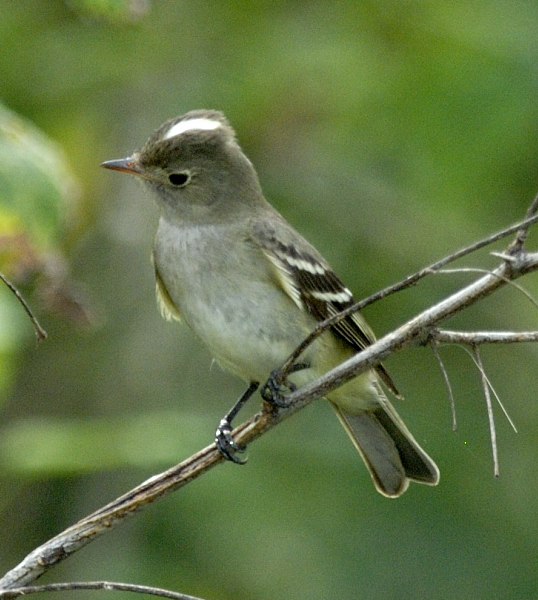
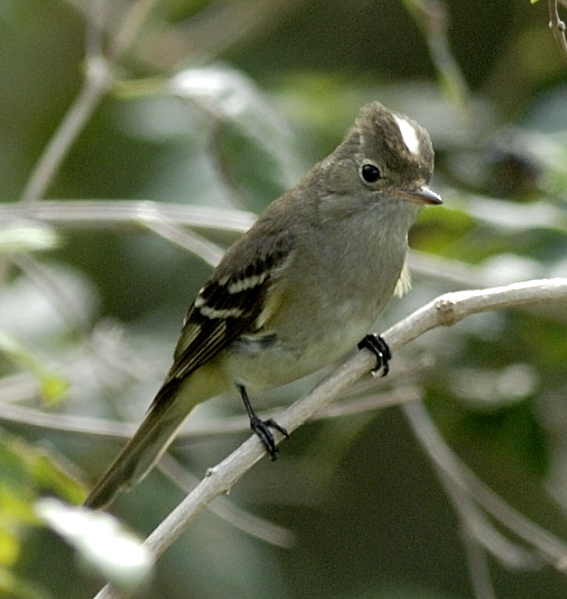
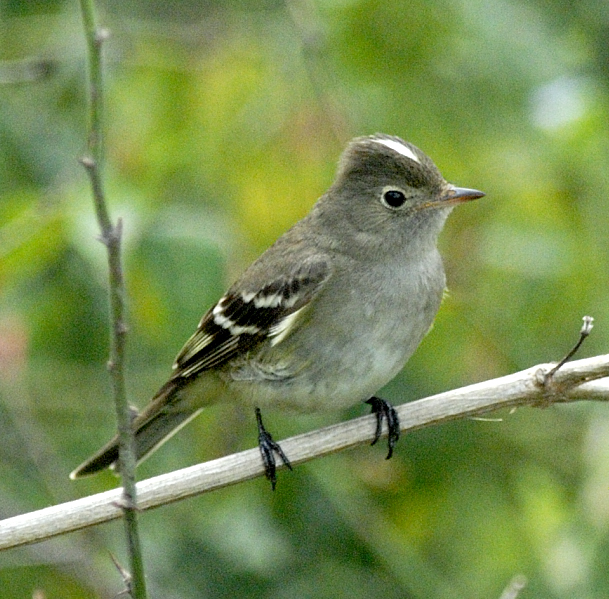
More Elaenia pictures


All photos copyright Erik Breden from Andrews TX.
More of his pics can be found @: http://www.otterside.com/winter2008/index.htm#Elaenia

I'm wishing I could drop everything and catch a plane to SPI TX. oh well, I'll have to make do with all the N Shrikes that are being seen. I saw another one today. That's something like 10 for the entire winter.

Happy Birding!

Monday, February 11, 2008

News flash from TX!!!

DATELINE: Feb 9 2008, Sheepshead road, South Padre Island, lower TX coast, 3:54pm


photo credit: scarlet colley


A post shows up on the Texas bird list. The poster explains that Dan Jones (http://antshrike.blogspot.com/) just called to report a very rare bird. A bird so rare that there is not yet a record north of the equator.
The bird Dan reported was initially IDed as a Yellow-Bellied Elaenia. A common flycatcher of central and south america. Hours later, the bird was Re-identified as a WHITE-CRESTED ELAENIA. A bird rarely seen in Northern Brazil and never before north of the equator.

The following is excerpted from the ABA's E-bulletin:
"Elaenias are tyrant flycatchers found in two genera, Elaenia and Myiopagis (smaller than former and often resembling tyrannulets), all representatives native to the Caribbean, Central, or South America. There is one accepted North American record of a Greenish Elaenia, Myiopagis viridicata present on High Island 20–23 May ’84 and another elaenia, one not accepted to species but thought to be a Caribbean Elaenia, from Santa Rosa Island, Escambia County, FL on 28 April ‘84.

As many birders to South America know, elaenias are very difficult to separate. Elaenias in the genus Elaenia are mostly frugivorous birds of the forest edge. First thought to be Yellow-bellied Elaenia, Elaenia flavogaster, a species which breeds north to the southern Mexican states of Veracruz and Oaxaca, the SPI bird is now thought to be a subspecies of the highly migratory southern subspecies of the entirely South American White-crested Elaenia, Elaenia albiceps chilensis (embed this URL in the word “White-crested Elaenia”) http://www.otterside.com/winter2008/index.htm#Elaenia Elaenia albiceps chilensis, a species that breeds as far south as Tierra del Fuego, Chile. The chilensis subspecies spends the Austral winter as far north as Brazil, arriving by March.

John Arvin, from the Gulf Coast Bird Observatory, explains that highly migratory southern populations of species (longer wings) are often the ones that are found as extralimital, and not the northern populations that are usually short distance migrants."

Pictures and videos were taken as well as recordings.
While the record still has to be reviewed by the TX records committee, the ABA, the AOU and a few other people, there is little doubt that it is indeed a White-crested Elaenia.

This bird, if accepted, will be a new record for North America, the ABA area, the AOU area and the Northern Hemisphere.

Huh, and the closest I will come to the bird will be High island TX. If the bird is still there 5 weeks from now.


Links to posts and pics:

http://surfbirds.com/birdingmail/Group/Texas_Birds?page=3&count=50

http://surfbirds.com/cgi-bin/gallery/display.cgi?gallery=gallery10

http://www.martinreid.com/Main%20website/wcelaenia.html

http://spinaturecenter.com/blog/

http://www.otterside.com/winter2008/index.htm#Elaenia

http://antshrike.blogspot.com
Sunday, February 10, 2008

Golden Eagle field trip


Dan Jackson and I went along on the Golden Eagle trip today led by Scott Mehus with the National Eagle center in Wabasha MN.
A total of 8 hardy, or foolhardy I should say, birders met in Cochrane WI at 1:30pm. We quickly headed up into the hills to see the Golden Eagles. Scott quickly pinpointed two adult goldens before a half hour had passed.


Dan and I cut out at about 3:00 to head up to Prescott to look for the Harlequin Duck. Alas though, it was not to be.


This beautiful adult Golden Eagle, 45 mins, one wrong turn and a 4-foot snowdrift later, we ended up right back where we had started.


We finally made our way to 35 to head north, but by the time we got there, it was too late the head up to Prescott. instead, we backtracked and picked up this very cooperative N Shrike:


This pic shows the tail quite clearly:


Across from the National Eagle center, we found these Trumpeter Swans:


all in all, a good day. 23 species despite the frigid cold and 3 new year birds and 1 new state bird.

Mute Swan, Trumpeter Swan and Golden Eagle were new year birds and Trumpeter Swan was a new WI state bird.

Friday, February 8, 2008

Year bird #41!!


So exactly what is year bird #41? if you haven't guessed already, it's an American Robin!
Kinda hard to believe that such a common bird would be found AFTER Lesser Black-backed gull but, there you have it.
It was far enough away that I spent about 15 mins making sure it wasn't a Varied Thrush!

I guess I just wasn't expecting a Robin at this time of year.

Sunday, February 3, 2008

Mississippi river today


My family and I headed over to the Mississippi this afternoon to watch Bald Eagles (this time it wasn't me conning dad into going, it was the other way around. This was his idea for a change). We started at Prairie Du Chien and headed up the river to Ferryville, then took Rush Creek Rd to county B to 27 to 171 and back home from there.

Here's some pics of the first Eagle we found:


We found a grand total of 3 Bald Eagles for the entire trip. No Goldens.
The river is still mostly frozen over except for small patches near the dams. The almost complete lack of birds was still astounding.


We took a detour back home via Rush Creek Rd where I found this N Shrike:


Other birds found today included:
about a dozen Mallards
20+/- Red-tailed Hawks
3 Bald Eagles
1 Rough-legged Hawk
2 N Shrikes
2 Kestrels
hundreds of starlings
Assorted common winter birds, including White-breasted Nuthatch, Titmouse ect

The weather wasn't all that great though. It was cloudy and gray all day. Even the birds knew it wasn't a great day.