Saturday, January 5, 2013

Mexico and Belize: a slightly different tropical adventure. Pt II

Yellow-faced Grassquit

Our couple of days on Cozumel were more than successful. We bagged not only the two endemic species, but also a few of the endemic subspecies.

Before, I go on, I should mention a quick note on the pronunciation.  In English, many people pronounce it "cah-zu-mel".  In Spanish, the "O" is always long, and locally, it is pronounced "co-zoo-mel" with the long "O" and the accent on the first syllable.

But back to my story...


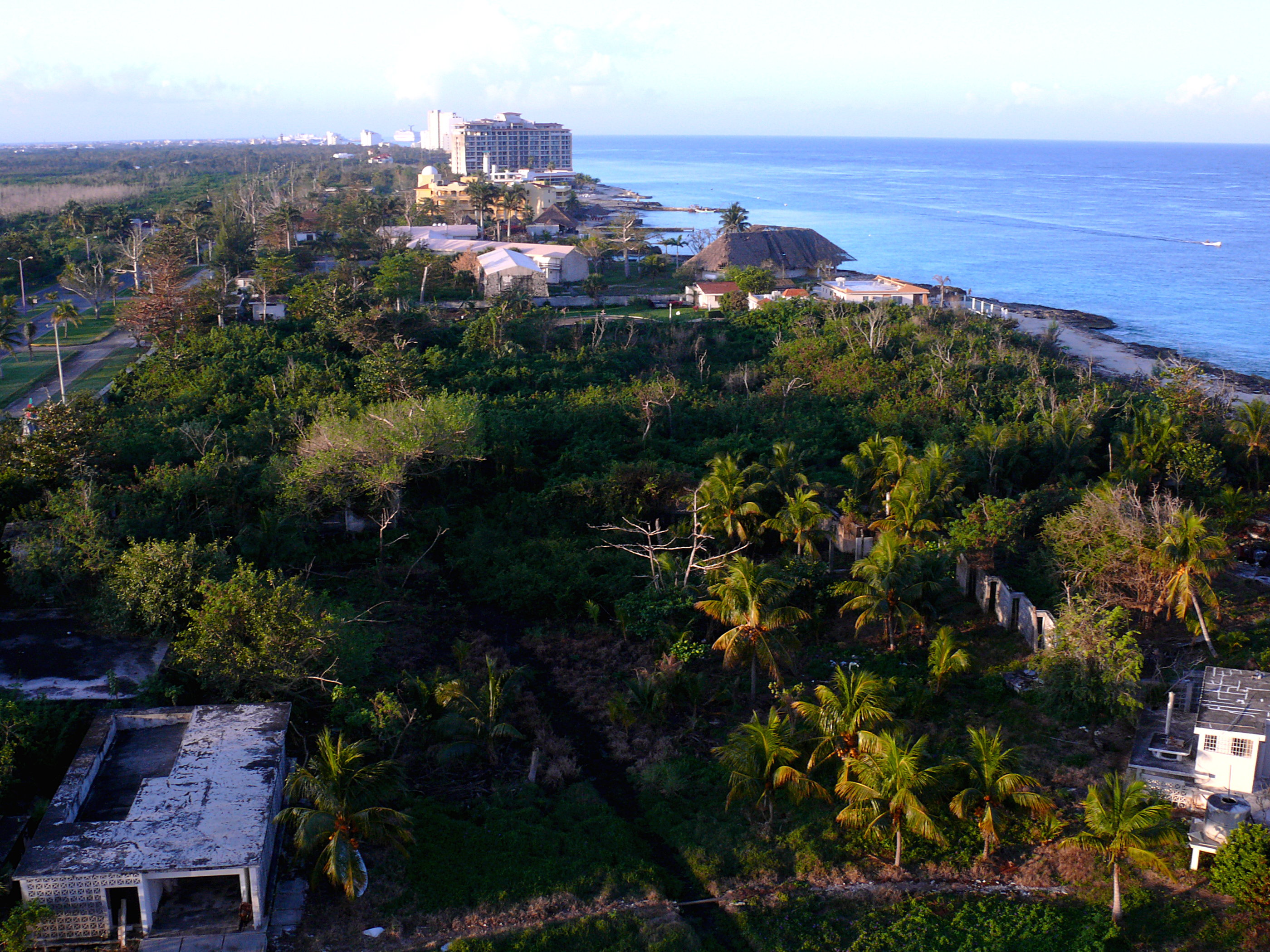
We arose early, just before sunrise, and headed straight to an abandoned suburb of the town that was never developed. This made it easier to traverse the rather thick scrub habitat. On the way, we picked up a couple endemic Cozumel Emeralds:


As is typical of abandoned areas, there was trash strewn everywhere. Everything you could think of was strewn on both sides of every path. We picked our way along while keeping an eye out for birds.
Black Vultures were common, sitting up in the open letting the morning sun warm their feathers.

As we walked, suddenly, a lone Roadside Hawk sailed over low and kept going out of sight. Unfortunately, it was the only one to grace our presence during our time there. The subspecies is endemic to the island.

We picked our way through Grassquits, Blue-gray Gnatcatchers and tons of White-eyed Vireos in search of our quarry.

Blue-gray Gnatcatcher 
Gnatcatchers were fairly prevalent on the island and the Yucatan endemic Black Catbird was so ridiculously common as to be almost not worth mentioning... Ok, just kidding, they're pretty awesome:

Black Catbird
It was interesting to see them right next to their cousins, Grey Catbirds, which were almost as common:

Grey Catbird

Fortunately, birding on Cozumel isn't terribly difficult and the endemics are common and we quickly turned up the other endemic species, Cozumel Vireo:
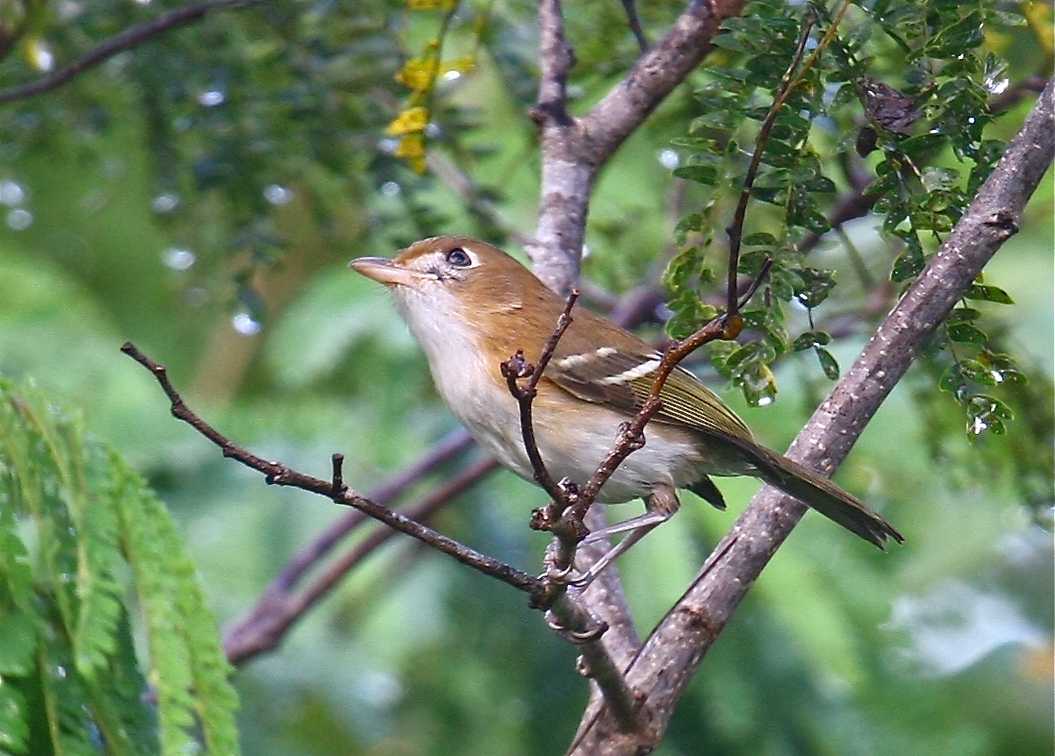
Cozumel Vireo

Bananaquits were also present in decent numbers

Bananaquit
It's always interesting to see the regional geographic variation in this species. The colors and patterns change with some regularity.

Here's a few examples of three subspecies in the same general area, separated only by water that look different from the ones on Cozumel:

http://www.flickr.com/photos/46789814@N05/7604370266/
http://www.flickr.com/photos/vivekk00/3293990439/
http://www.flickr.com/photos/75378295@N07/6950837736/


That evening, we went looking for nightjars. We didn't fail, but came up with only Paraque, which is common in the southern part of Texas. Ethan did manage to get an awesome, point-blank recording of it though.

Paraque 

Our second day of birding (morning really as we took off after birding for a few hours) on Cozumel landed us a much wanted endemic subspecies:

Cozumel Western Spindalis 
Stripe-headed Tanager is a fairly strictly caribbean species and was recently (I say recently, but I don't remember exactly when) split into a few species and renamed Spindalis.  The one that occurs on Cozumel is Western Spindalis. It's a bird I've been wanting to find in Florida for some years now and I was happy to finally see one, albeit in Mexico.

Generally, flycatchers were hard to come by on the island, but I did manage a nice photo of this Caribbean Elaenia:

Caribbean Elaenia

After spending a few hours birding, we hopped it back to the docks and caught the next ferry back to the mainland.  No band this time, but we did have another pleasant cruise across the ten miles of unbelievably blue water.

Arriving back at the mainland, we hopped aboard the next bus to Felipe Carrillo Puerto (often known simply as Puerto Carrillo among the locals).  Arriving in town just about mid-afternoon, we we stopped in at a local Super (supermarket) to stock up on supplies and were stymied by a burst of rain that left us sheltering under the supermarket's roof almost until sunset.

It's interesting who you meet and talk to when you travel.  As we were waiting for the rain to stop, a european guy biked up and parked. It turned out that he was a few days into an epic bike (I mean bicycle) trip that would take him all the way from Cancun to Tierra Del Fuego.  I love traveling, but I can't say I'm quite that ambitious. He didn't speak much english or spanish, so hopefully he's getting along somewhere, probably in Guatemala by now.

As evening came, the rain stopped and we finally ventured to hail a taxi to the edge of town at the start of the world-famous Vigia Chico Road.  This road starts in Puerto Carrillo and ends in the Caribbean Sea, traversing its way through the famous Sian Ka'an Biosphere Reserve.  Without a car, we didn't make it as far as the reserve, but had the taxi drop us at the edge of town where we grabbed our gear and hiked down the road for a couple miles until we found a secluded, hidden milpe just off the road where we could pitch camp for the night.

It was a slightly sketchy spot, but it was secluded and proved to be pretty decent birding.
As we settled in for the night, a Collared Forest-falcon called in the distance and Thicket Tinamous sent their harmonic humming laconically languishing through the evening air.


In my next post, I will cover our two days on Vigia Chico Road and our long bus ride to Mountain Pine Ridge Reserve in Belize.


Til next time, Happy Birding!


Friday, January 4, 2013

Backpacking Mexico and Belize: a slightly different tropical adventure


Mexico has always been a country I've wanted to visit. It boasts many endemics and has the finest infrastructure of any country I've yet been to south of the border, but we'll get to that later.

This trip came about when my friend Ethan Kistler decided he needed to get out of the country, chose Mexico's Yucatan peninsula and Belize to visit, and then kindly invited me along.  A month's worth of planning (and the addition of my friend Eric Ripma) later, I found myself on a direct flight from Chicago to Cancun.  I arrived rather late at night and checked into the first hotel I found nearby the airport.  After a quick dinner, I settled into my room. Ethan and Eric wouldn't arriving til late the next morning.

When the sun came up, I jumped up early and went straight to the window that overlooked the courtyard. As I opened the window, I almost had to duck as a Great Kiskadee came very close to hitting me, banking up and away just at the last second.

I quickly dressed and headed outside where more birds greeted me cheerily.  Melodious Blackbirds called from all around and the pair of Kiskadees regarded me suspiciously.  As I birded around the pool area and adjacent forested courtyard, I picked up a mix of both familiar and foreign species.  White-eyed Vireos and a Summer Tanager were first, but quickly followed by Social Flycatcher and a lone Masked Tityra. The next bird to drop down appeared at first to be a Red-eyed Vireo, but the color wasn't quite there, it appeared much darker.  Subsequent checks of the field guide showed what it was; a Mangrove Vireo.  Similar to Red-eyed and in the same family, but far more common in the Yucatan.

After spending a couple hours birding, I headed over to the airport to meet up with my friends.
We quickly caught the next ADO coach bus to Playa Del Carmen.
Playa Del Carmen is famous around the world for its white-sand beaches and is one of the top tourist traps in Mexico.  Fortunately, we didn't have to spend very long here as the ferry to Cozumel left about an hour after we arrived at the ticket booth.

The ferry ride to Cozumel was amazing to say the least.  After hearing way too many stories of rough crossings and people getting seasick, we were pleased to be able to sit on the upper deck and enjoy the sunshine, the fresh ocean breeze and waters as calm as a millpond.  The bonus was having a local band playing a mix of favorites, providing a tropical flair to our first day of the trip.

Playa Del Carmen from the ferry
This trip was really my first time seeing the waters of the Caribbean sea.  In most places in the USA, the water you see from the coast is the Gulf of Mexico and those waters are often green in color.  The Caribbean was completely different. The water was a deep blue that is almost impossible to describe and so clear that 20 or 30 feet of water didn't do a thing to obscure the sandy ocean bottom.

This adds a very real meaning to the often heard term "deep blue sea" 

Isla Cozumel is a Caribbean emerald just ten miles off the coast of Mexico.  Ten miles isn't very much, but it is enough to create endemics of the birds and other animals that live there.

Cozumel boasts two full species endemics and several endemic subspecies.  Cozumel Emerald and Cozumel Vireo are the two that are found nowhere else in the world. Cozumel Roadside Hawk and Cozumel Stripe-headed Tanager (now known as Western Spindalis) are just a couple of the endemic subspecies.

One other endemic subspecies that presents an interesting conundrum is Cozumel Wren.  Currently, this species is lumped with House Wren and is considered an endemic subspecies. Having now seen this bird, I treat it as a full species on my personal list. Not having DNA analysis handy, I can see nothing in this species that even resembles the House Wrens I know and have seen in multiple countries. The bird not only looks and sounds different, but also lives on an isolated island in completely different habitat, has different habits, and likely has a differing diet and foraging habits. It would seem to me that some dedicated studies of this species would provide enough evidence to elevate it to full species status.


But back to my narration:

Isla Cozumel
About 45 mins later, we docked at the ferry terminal on Isla Cozumel.
Grabbing our gear, we started the long hike to the other side of the island where we were staying with a local Couchsurfer (Couchsurfing is an awesome social network if you ever get the chance to become familiar with it).  The hike was a little longer than we expected, due to having to walk about half a mile or so down past the cruise ship pier before turning inland, but we made it.

Our host for the night worked at the second of the two universities on the island.
After some fashion, we made it to the university and asked for Oscar.  We were told that he worked upstairs at the end of the hall. We found the room dark and locked. Returning downstairs we asked another person who said he was in another building. Not finding him there either, we returned and were eventually directed to someone who spoke english. He then informed us that Oscar was not on the island and would be gone for a while. As you can imagine, we were slightly unnerved by this news, but insisted that we were supposed to meet him at the university that day.  After a little bit of discussion, we learned, to our relief, that there were two Oscars who worked at the university and we had been directed to the wrong one.  We were quickly sent to Oscar (the seconds') office where we found him.  After waiting a little bit for him to finish up, we all walked back to his house.
Oscar's house was simple and nice, nothing too fancy. It was just about everything a single guy would need.  We dumped our gear and drew straws for the couch.  I drew the short straw and set up my sleeping pad on the tile floor (which proved to be not entirely uncomfortable.  I was glad I brought it.)

Oscar was a very friendly and very generous host and treated us to a homemade local dinner of tortillas, beans and Chicharrones, which is an interesting concoction consisting of fried pork skins, salsa, peppers, etc, cooked together in a shallow saucepan.  Corn tortillas are rolled and used as a second utensil.  It was a cool introduction to some local flair that tourists often miss.

We settled in for the night and set the alarm for very early the next morning in order to maximize our time on the island.

For anyone visiting Cozumel, I would recommend getting away from the cruise ships and the tourist areas of town and exploring the rest of the island. It's quite a different experience than you would get if you just stayed by the beach and the docks.


Til next time, Happy Birding!


Saturday, December 8, 2012

Back to the Tropics!!


Isla Cozumel


In about 16 hours, I will be on a flight back to the tropics.  This time, the destination is Mexico's Yucatan peninsula, Belize and Guatemala.   I, along with a couple friends, will be alternately backpacking, birding, hitchhiking, bus-touring this region for the next two weeks.

Our goal is to see as many birds as possible including as many of the region's endemic species as possible.

After flying into Cancun, our first destination will be Playa Del Carmen to catch the ferry to Isla Cozumel to search for the four endemic species of birds found there.  

We will then bird along Vigia Chico road for a couple days before catching a bus to Belize City, and from there, to the small town of San Ignacio.  Once there, we will head up into the Mountain Pine Ridge preserve which is a spectacular preserve of sub-tropical pine trees, mountain streams, rocky pools, and awesome scenery.  

After birding there for a few days, we will catch the bus to Guatemala where we will head to the world-famous Tikal National Park where we will spend a day and a half birding the ancient Mayan ruins before catching a bus back to San Ignacio.

From there, we'll head back to Mexico to spend a couple days at Calakmul reserve where it sounds like we have our best chance for seeing a Jaguar, among other things.  

After that, we'll head north to Ria Lagartos estuarine preserve for some coastal mangrove and waterbirds including Flamingos.  Two days spent birding there will end our tour of the Yucatan Peninsula. We'll catch a bus back to Cancun and be back in the States for Christmas.

I will then have much to blog about and many photos to share.

Til then,
Happy Birding!
See you in a couple weeks!


Friday, November 30, 2012

Chasing the Hawk-owl

Pine Grosbeak


When my alarm went off, I wondered why it had.  It was still dark outside. Glancing at my phone, I noted the time. 4:30am; not any time for any reasonable person to be awake. Unfortunately for me, since I'm a birder, this was "normal" time.  I hopped up, grabbed my gear and headed downstairs. Rob was already awake.  By 5, we had loaded all our gear into my car and were set to take off.  No snow in the air just yet, but it was bitterly cold for a November morning.  I was glad the heat in my car has always worked better than any other system.

A cold, bleak dawn found us well on our way, headed north and east past Green Bay towards Door County where a Northern Hawk-owl had been found.  On the way, we chattered about birding, records, chasing, doing a big year, etc., the usual kind of chatter you hear from crazy birders like us.
After a short stop in Green Bay to grab some food (apparently Rob can't run on just birding alone... who does that? jk :D ) we were well on our way to where the Hawk-owl was hanging out.

Northern Hawk-owl is a fairly rare winter visitor to Wisconsin.  As far as I can tell, the last one to be seen in the state was seen during the great owl irruption of 04-05 at Harrington Beach State Park.  
I've seen dozens of these awesome birds in Northern Minnesota, where they are regular winter residents, but this was my first chase of one in Wisconsin.

After driving most of the way to Sister Bay, we arrived at the Hawk-owl spot around 8:30am.
The Hawk-owl obliged us by sitting in the open, on the power line as we drove up.  Two other birders were already present and watching the bird from the warmth of their cars.

We managed to get a few photos off before it flew back into the Spruce trees across the road.  It perched up momentarily where a flock of White-winged Crossbills mobbed it. Then it flew down out of sight before popping up farther back among the trees. The bird hung out among the trees for the better part of half an hour (during which we spent some time observing the other birds in the area (Crossbills, Redpolls, Pine Grosbeaks, etc) before finally emerging and obligingly perching at the very top of a tall Spruce:


After a customary high-five and watching the bird for about an hour and a half, Rob and I called it quits (it was bitterly cold with a stiff 10mph breeze) and headed home.  

7 hours round-trip, an hour and a half on site, and I added a new bird to my WI state list.
It's not often I get to see two new state birds in the same week!  The Hawk-owl was a lifer for Rob and #312 for his WI year list. That's pretty impressive!


Til next time, Happy Birding!

Monday, November 26, 2012

Birding the Lakefront


It's been some time since I've posted a birding report here. Facebook has taken over much of the blogging world and few of the old bloggers remain. Some retain their relevancy and some newer ones attempt to maintain it, but blogs now take the second seat in this day.  Given that, I still try to maintain this one.

I hadn't been to the lake since late last winter, so on Sat, I decided to take a jaunt on over to see what I could find.

I started off at Grant Park on the south side of Milwaukee where I ran into a few friends; Rebecca Setzer, Seth Cutright, Paul Sparks, Joan Sommer and a few others.  They were gathered near the tennis courts where most of the winter finches had been hanging out.  As I arrived, they pointed out the five Red Crossbills that were partaking of the grand selection of cones in the area.
They proved difficult to photograph with the light, but I did get one decent shot:

Female Red Crossbill

Unfortunately, these were the only boreal birds in the area that morning save for a lone Common Redpoll.  It was better than nothing, but not the birds I was looking for.

Not a bird, but while at there, we saw two Bucks, staying safe from hunters in the confines of the city park. Both of them had large racks:


After birding Grant park and finding next to nothing (our only other notable bird was a flyover Rough-legged Hawk) I took off ahead of the group and headed north.  An Eared Grebe had been reported at Bayview Park just up the shore. Alas, all I could find were endless streams of Red-breasted Mergansers:


After checking Texas Ave, South Shore and Discovery World (only a few Greater Scaup here), I resigned myself to the notion that the Eared Grebe was either not present, or hiding.

North Point in Milwaukee turned out to be the most productive spot of the day. When the group arrived, I already had my scope on all three Scoters. Also present were: a Common Loon, two Long-tailed Ducks and an adult Bald Eagle fishing out on the lake.

Horned Grebes were present in several places in Milwaukee as well as farther north.


At the harbor entrance under the Hoan Bridge, I discovered a single Red-necked Grebe, though the light proved too difficult for any photos.  Two out of three isn't too bad.

After Milwaukee, I headed to Port Washington. Port was quiet, but a flyover Wood Duck was a surprise.
After grabbing lunch at the Dockside Deli (excellent sandwiches) I hopped on the highway to Sheboygan.  

Just south of Sheboygan is Kohler-Andrae State Park. It's actually two state parks right next to each other that are treated as one.  This park has had some pretty awesome birds in past years.  This time, the park was pretty quiet. There were zero passerines save for a few birds around the feeders.
I ran out to the beach and scoped the lake. A dozen Black Scoters were just offshore along with a few Horned Grebes and more Red-breasted Mergansers. Just beyond the heat shimmer was a large raft of Long-tailed Ducks. My minimum estimate was a thousand.  After picking through and finding nothing else of interest, I headed north to Sheboygan.

The Blue Harbor area in Sheboygan was largely devoid of birds. Most notably, the Snowy Owl that had been hanging out there.  I quickly ditched that and headed up to the marina where this Snowy Owl gave us awesome views:


While viewing the Snowy Owl through the scope, we heard the calls of Waxwings behind us.
Picking through some fruit trees across the street from the marina were about 50 or so Cedar Waxwings. Since Bohemian Waxwings had been seen in good numbers in the southern part of the state already, we gave it a go.  The lone Bohemian Waxwing in the group flew right past my head and landed up high in a nearby tree where I quickly pointed it out to the others. We all got scope views eventually. It was an awesome bird to end the day with:


This was not only a new state bird for me (WI #330), but also a new one for my Lower 48 list.


With the sun setting, I started the long trek back home.  Not too bad a finish after a slow start to the day.

It's sounding like it's going to be some pretty sweet birding this winter. We'll see what turns up in the next two weeks before I head out.

Til then, Happy Birding!